








But meditation isn't really about stillness. It's about giving your brain one simple, repetitive thing to focus on so the background noise, the to-do lists, the replayed conversations, the low-grade anxiety, finally has somewhere to go. Once you look at it that way, you realize you've probably been doing it for years without ever putting a name to it.
Here are some ordinary moments that quietly do the same job as a meditation cushion.

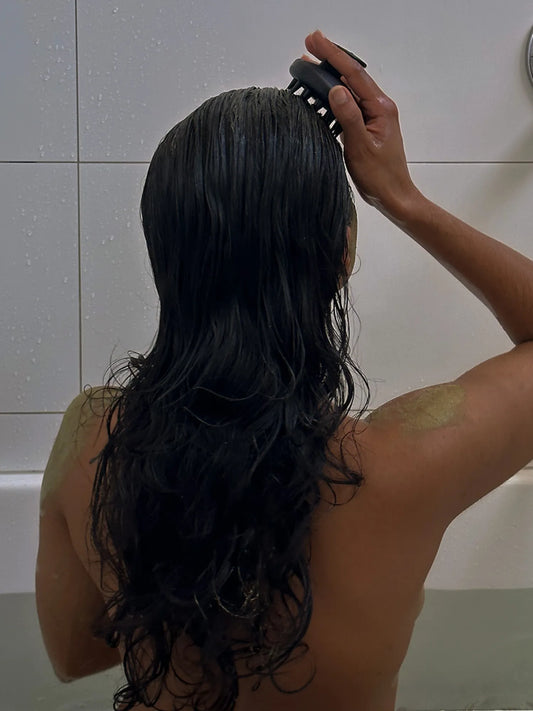
A quiet bath or shower, nothing else going on
No phone. No music. No one talking to you. Just heat, water, and whatever your brain decides to do with the silence.
That's rare enough on its own, most of the day is spent half-attending to something, a screen or a conversation or a task pulling a slice of your focus. Take all of that away and the mind doesn't go blank, it goes inward. Thoughts start moving on their own, slower, less defended, without you steering them. That's the same drifting, associative state meditation is trying to produce on purpose. A bath or shower just gets you there for free, which is probably why so many people swear their best ideas show up exactly there and nowhere else.
Top 5 Benefits of Shower Meditation on Hair Growth

Cooking, then doing the dishes by hand
Chopping, stirring, tasting, adjusting, cooking from scratch is basically a string of small, repetitive, sensory tasks strung together. Your hands are busy, your senses are engaged, and there's no room left over for spiraling thoughts. It's the same mechanism that makes meditation work.
Staying in that mode through the dishes only works if you stop resisting it. Done resentfully, as fast as possible, dishes don't do much for you. Done slowly, noticing the warm water, the weight of a plate, the rhythm of it, they become almost accidentally calming, a quiet second act to the same meditative task.

Knitting, crocheting, or anything with your hands that repeats
There's a growing body of research on repetitive, bilateral hand movements (think: knitting, rowing, even walking) and their effect on anxiety and nervous system regulation. Some studies have even looked at whether these kinds of rhythmic hobbies offer protective effects for the brain over the long term. The short version: busy hands, quiet mind.

Dancing around your room with nobody watching
Not a class, not choreography, just moving however your body feels like moving. There's something about unstructured movement that pulls your attention fully into the present: you're tracking rhythm, balance, the next motion, which leaves no real bandwidth for anxious or looping thoughts. It's the same mechanism behind more formal mindfulness practices, just with a beat instead of a breath count. Movement therapy research backs this up too, rhythmic, expressive movement has measurable effects on mood and stress that look a lot like what meditation is credited with.

Walking with just your own thoughts, no music or podcast
No feed, no voice in your ear, nothing to react to, just quiet, and whatever your mind wants to do with it. It helps if there's something natural in view along the way, trees, water, open sky, since green space seems to ease mental fatigue in a way concrete doesn't.

Watching a flame
Long before screens, before books, before most things we now consider relaxing, there was fire. Staring into it is one of the oldest attention-anchors humans have, hundreds of thousands of years of habit built into us. A candle or a fire pit still works today for the same reason it worked for people who had never heard the word "meditation."
