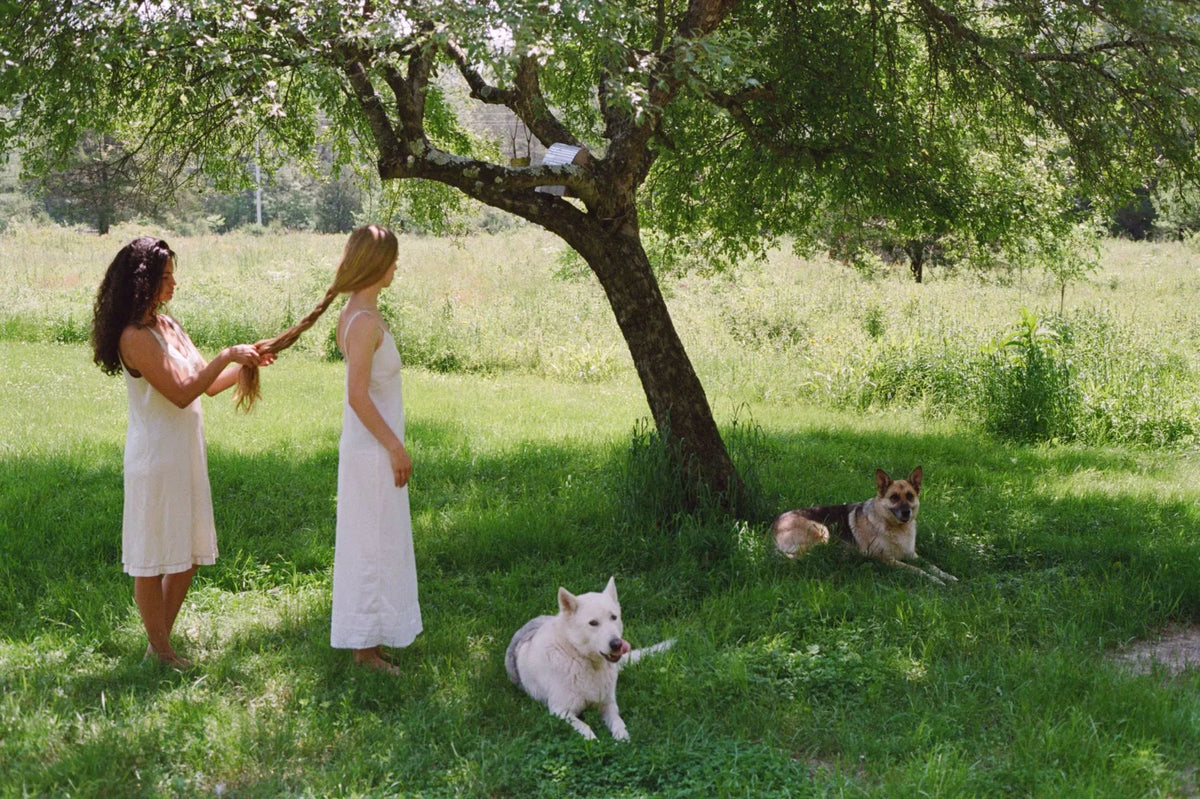
Slowing down doesn't come naturally to most of us. Our days are built for speed: notifications, deadlines, to-do lists that reset before we've finished them. Rituals, the small and deliberate kind, are how we push back against that pace. They don't need to take long. They just need to be done with attention. Here are eight to bring into your day.

1. Morning Mindfulness
Before you reach for your phone, take a few minutes for yourself. Focus on your breath, name one thing you're grateful for, and set an intention for the day ahead. It's a small shift, but it changes the tone of everything that follows.
2. Savour Your Meals
Most meals get eaten on the move: at a desk, over a sink, mid-scroll. Try sitting down for at least one meal a day without a screen. Notice the flavours and textures. Eating slower isn't just calmer, it also supports better digestion.
3. Disconnect From Technology
Pick a window each day, even just twenty minutes, to put your phone away entirely. Constant notifications keep your nervous system on alert. Stepping away, even briefly, gives your mind room to settle.

4. Nature Walks
Nature has a way of resetting a scattered mind. A walk through a park, along the coast, or under trees does more for your nervous system than most wellness routines. We built HINU around the belief that we heal best when we stay rooted in nature, and this is one of the simplest ways to practice that.
5. A Scalp Ritual
Oiling your scalp is one of the oldest slow-down rituals there is. Warm a few drops of Hair Growth Oil between your palms, work it into your scalp with slow, circular pressure, and give yourself five uninterrupted minutes. It's grounding in the same way meditation is, just with a tangible result for your hair.
6. Journaling
Write for a few minutes each day: what happened, what you're grateful for, what you're working toward. You don't need a system or a prompt. The point is the pause, not the prose.