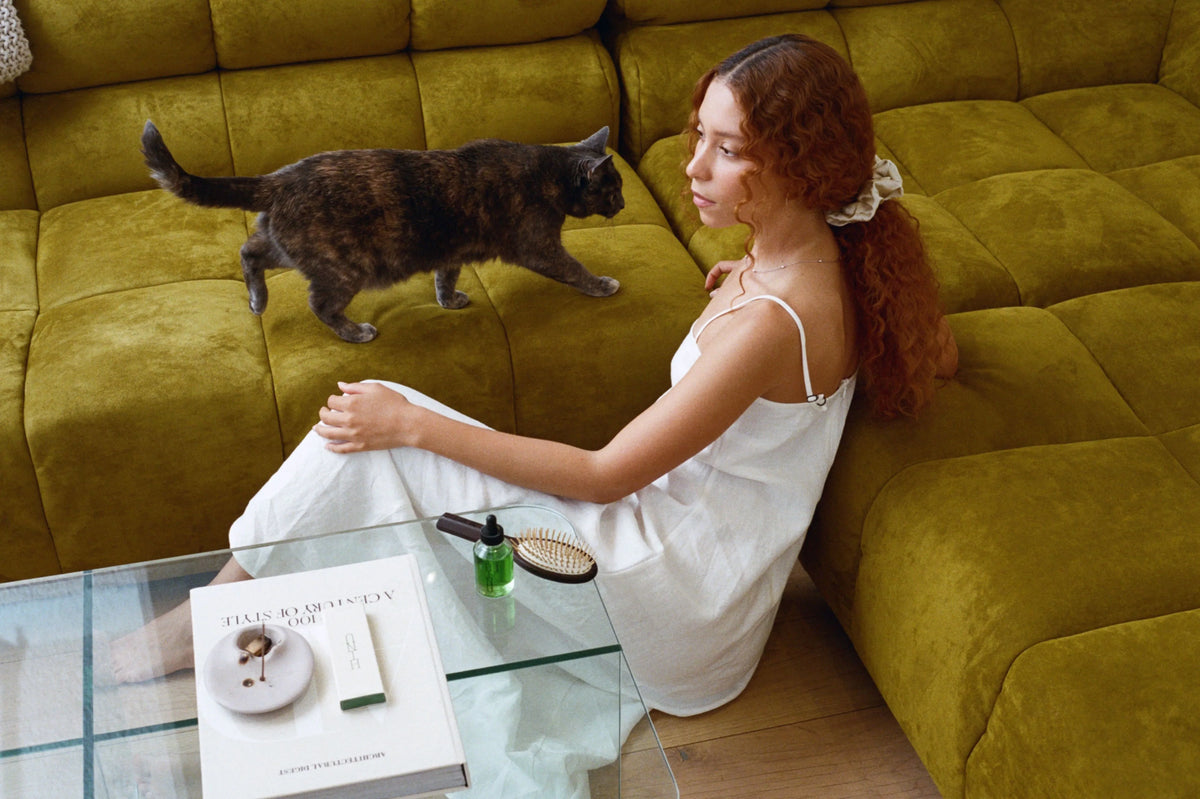
It's less a strict rulebook than a way of paying attention: noticing where small, synthetic stressors have crept into daily life, and softening them where it's easy to do so.
Applied to hair and beauty, low-tox living looks a lot like the small, everyday moments that never make it onto an ingredients label: the brush you reach for, the pillowcase you sleep on, the tea you sip each morning. None of these carry the weight of a serum or a shampoo, but they add up, quietly shaping how much friction, static and unnecessary exposure your hair carries through the day. Some days that looks like brewing loose-leaf tea instead of reaching for a plastic-lined bag. Other days it's remembering to plait your hair before bed. There's no need to get it perfect. What matters is the noticing, and the small, gentle choices that follow.
1. Loose-Leaf Tea Over Plastic Tea Bags

It sounds unrelated to hair, but it's a gentle place to start. Many premium, heat-sealed tea bags are made with plastic polymers like nylon or polypropylene, and studies have found that steeping some of these bags in hot water can release surprising amounts of microplastic and nanoplastic particles into your cup. Not every tea bag is made this way, but for those who drink tea daily, brewing loose-leaf in a stainless steel or glass infuser is a small, low-effort way to reduce this exposure.
2. A Silicone Scalp Massager Over a Hard Plastic Brush

Your scalp is skin, and skin deserves a gentle touch. A food-grade silicone scalp massager moves more softly than rigid plastic bristles, lifting product buildup and encouraging circulation without scratching or irritating the scalp. It's a small shift, but it can turn shower time into a moment of quiet care rather than routine.
3. Silk Bedding and Natural Fibres Over Synthetic Fabrics

If you've ever woken with a frizzy tangle, your pillowcase may be partly to blame. Silk creates far less friction than cotton or synthetic blends, meaning fewer tangles, less breakage and smoother strands by morning. Synthetic fabrics also shed microplastic fibres with everyday use, fibres we're in close, prolonged contact with for a third of our lives. Choosing natural fibres for bedding is a simple way to soften that nightly exposure.
4. Botanical Hair Oils Over Silicone-Based Serums

Silicone serums can make hair look shiny in an instant, but that shine tends to sit on the surface rather than nourish what's underneath. Nutrient-rich botanical hair growth oils work differently. They feed the scalp and protect the hair shaft with conditioning lipids and antioxidant compounds, offering results that build slowly and genuinely, rather than washing away with the next shampoo.
5. A Wooden Hair Brush Over a Plastic One