










That experience changed how I thought about hair care entirely. I started paying attention to what my hair was actually asking for, and built a handful of small rituals into my week. None of them were dramatic. All of them, together, changed everything, and most of them have nothing to do with what's in the shower.
Here's what actually worked.

1. Oiling, 1-2 Times a Week
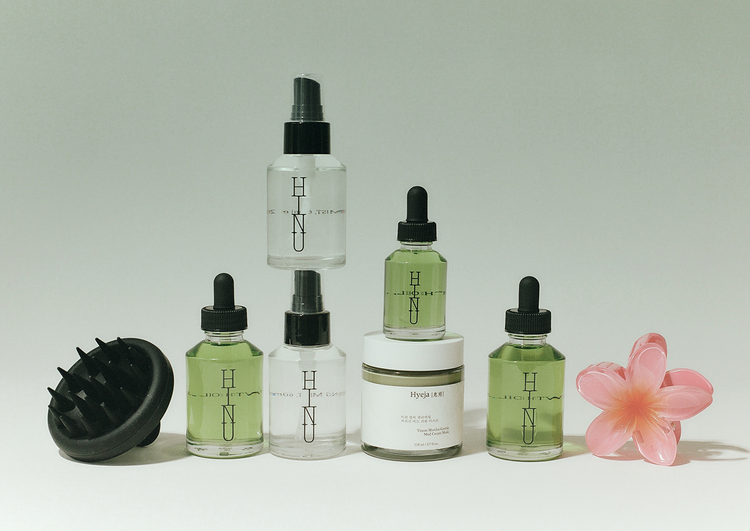
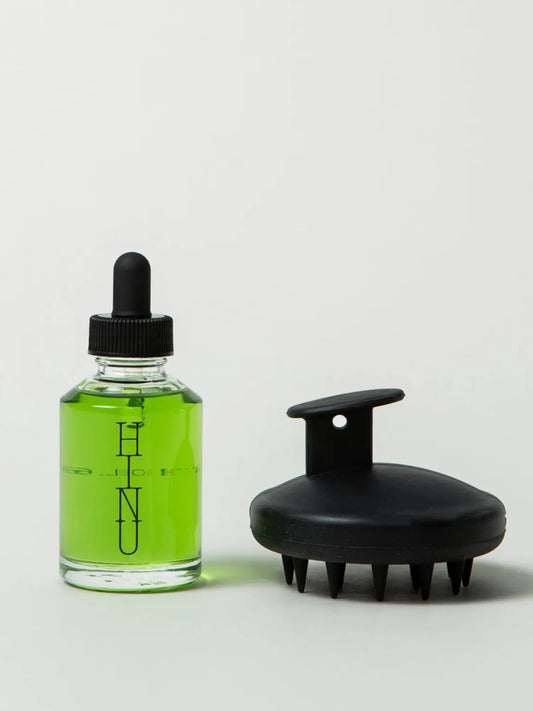
When I first started growing my hair back, oiling was one of the first rituals I leaned into, it's been part of hair care traditions for generations, and it ended up being one of the rituals with the biggest payoff. Twice a week, I warm a little of our Hinu Hair Growth Oil between my palms, work it through my scalp and the lengths, and leave it for at least thirty minutes before washing out, sometimes overnight if I remember to throw a towel over my pillow. Nourishing the follicle directly is what actually feeds new growth, not just the strands you can already see. My hair stopped feeling brittle within a few weeks, and the new growth coming in at my part felt noticeably stronger.

2. The Scalp Massage
A few minutes a day, fingertips, no nails, slow circular pressure from the hairline back, became my favorite habit by accident. It boosts blood flow straight to the follicles, which is exactly where new growth starts, and on the days I'm stressed, it doubles as a tiny reset button too. I do it dry before bed, or wet with a bit of oil before washing. Lately I've been reaching for our Scalp Massager instead of just my hands, the silicone bristles stimulate circulation more consistently than my fingers can and clear away buildup that can clog follicles and slow growth.

3. Actually Managing My Stress
This one isn't a hair tip on the surface, but it might be the most important thing on this list for actual growth. Chronic stress pushes hair follicles into a resting phase early, which is what shows up later as shedding, slower growth, and texture that just feels "off" no matter what you put on it. I didn't overhaul my life, I just started protecting ten quiet minutes a day, away from my phone, to breathe or walk or do nothing. Our jade scalp stimulator became part of that wind-down, too, the cool stone has a genuinely calming effect during a massage while still stimulating the same blood flow the follicles need to keep producing. My hair calmed down, and started growing back, roughly the same time I did.

4. What I Eat Shows Up in My Hair
Hair follicles are some of the most metabolically active cells in your body, but they're also one of the first things your body stops nourishing when resources are low, which is why crash diets and growth almost never coexist. I started paying attention to protein, iron, and healthy fats (eggs, leafy greens, nuts, fatty fish) instead of treating growth as something purely topical.

5. Protecting 8+ Hours of Sleep
I used to treat sleep as the first thing to sacrifice. Now I protect it, because most growth hormone release happens during deep sleep, and that hormone plays a role in keeping hair follicles in their active growth phase, while poor sleep is linked to higher cortisol, which can push follicles into shedding earlier than they should. Once I started consistently getting eight hours, my hair felt noticeably stronger within a couple of months.
