



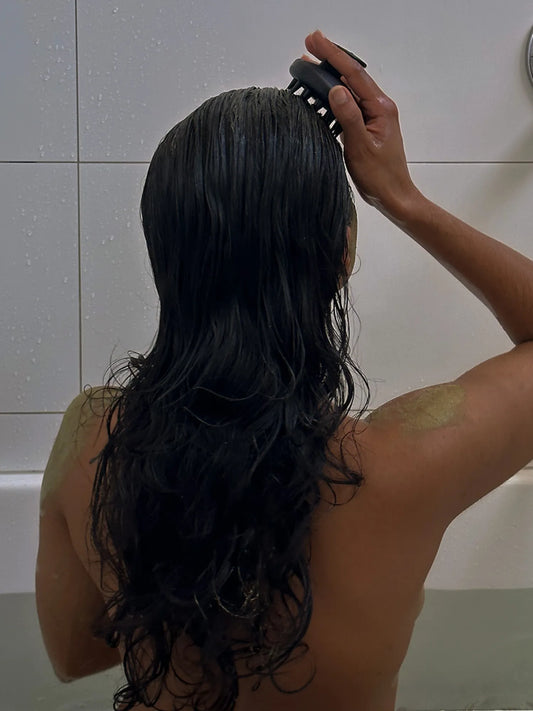





A ritual is not a longer, prettier version of a routine. It is the same act done with intention, with a quality of attention that makes it feel like it belongs to you. When we light incense, prepare tea, or apply skincare without rushing, we are not just taking care of ourselves. We are actually showing up for ourselves. Here are five reasons that distinction matters more than most of us realise.

01. They signal to your brain: this moment is mine
Neuroscience tells us that repeated, intentional behaviours, especially those anchored in sensory experience, activate the brain's reward circuitry in a way that unconscious habits simply do not. When you bring deliberate attention to an act, your nervous system registers it as significant. Over time, the ritual itself becomes a cue for calm, focus, or joy, a doorway your body learns to walk through with ease. For women who often carry the mental load of others, this matters enormously. A ritual says: right now, I am here for myself.
02. They create continuity in a fragmented world
Life is increasingly discontinuous. Notifications pull us in twenty directions, our attention is fractured, our days rarely feel cohesive. Rituals offer a thread. The same cup held the same way each morning. The same scent smoothed into skin each evening. These repeated, embodied acts weave a sense of self across the chaos. Psychologists refer to this as narrative identity: the story we tell ourselves about who we are. Rituals are quiet chapters in that story, written daily.

03. They are a form of active rest
True rest is not the absence of activity. It is the presence of restoration. A ritual that asks you to slow down, to use your hands, to notice texture and scent and warmth, engages the parasympathetic nervous system in a way that scrolling through a phone never will. Research into restorative experiences consistently finds that gentle, sensory-rich activities reduce cortisol, lower heart rate, and improve mood far more effectively than passive distraction. A skincare ritual, a tea ceremony, a slow bath. These are not indulgences. They are medicine.
04. They connect us to something larger than the self
Many of the rituals women have kept throughout history, preparing food with care, tending to the body, marking the seasons, are practices inherited across generations. Even when we are unaware of it, engaging in ritual taps into a lineage of women who did the same. There is comfort and power in that continuity. It reminds us that self-care is not a modern invention or a trend. It is an ancient form of wisdom, quietly passed down through the hands of those who came before us.

05. They build a relationship with yourself
Perhaps most simply, rituals are the practice of showing up for yourself, consistently, tenderly, without condition. Every time you honour a ritual, you send a message to your own psyche: you are worth this. That accumulation of small acts of self-regard is, over time, the foundation of genuine self-trust. Not the kind that comes from achieving things or being seen by others, but the kind that is quiet and steady and entirely your own.
